Jacques Tati
- By: theartofcinema
- Category: FrenchTagged: jacques tati, Monsieur Hulot
- June 12, 2026
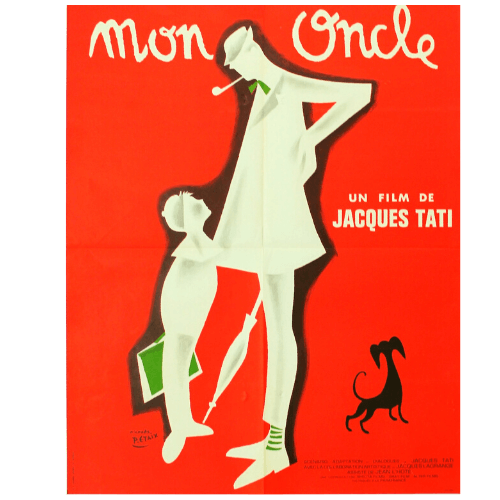
The minimalist, whimsical design was created by the French illustrator, actor, and filmmaker Pierre Étaix, who served as Tati’s assistant director and gagman for the film. The poster captures the towering silhouette of Tati’s signature character, Monsieur Hulot, complete with his raincoat, high-water trousers, striped socks, and a smoking pipe. Beside him is his young nephew, Gérard, looking up at him, along with a stray dog running below. Celebrated for its brilliant physical comedy and exaggerated mechanical soundscapes, Mon Oncle won the Academy Award for Best Foreign Language Film and the Special Jury Prize at the Cannes Film Festival.
Jacques Tati (1907–1982) was one of the most influential directors and comic actors in French cinema history. Best known for creating the beloved, bumbling character Monsieur Hulot, Tati revolutionized visual comedy by trading traditional dialogue for intricately choreographed physical gags and highly stylized sound design.
His key works are:
Tati rarely used close-ups. He preferred wide shots where multiple gags happen simultaneously in different parts of the frame, forcing the audience to active explore the scene. Dialogue is secondary and often mixed to be intentionally muffled or unintelligible. Instead, Tati amplified everyday sound effects—like a buzzing neon sign or a squeaking leather chair—to highlight the absurdity of modern objects.